Social Media & Google Ads Strategy for Healthcare Growth
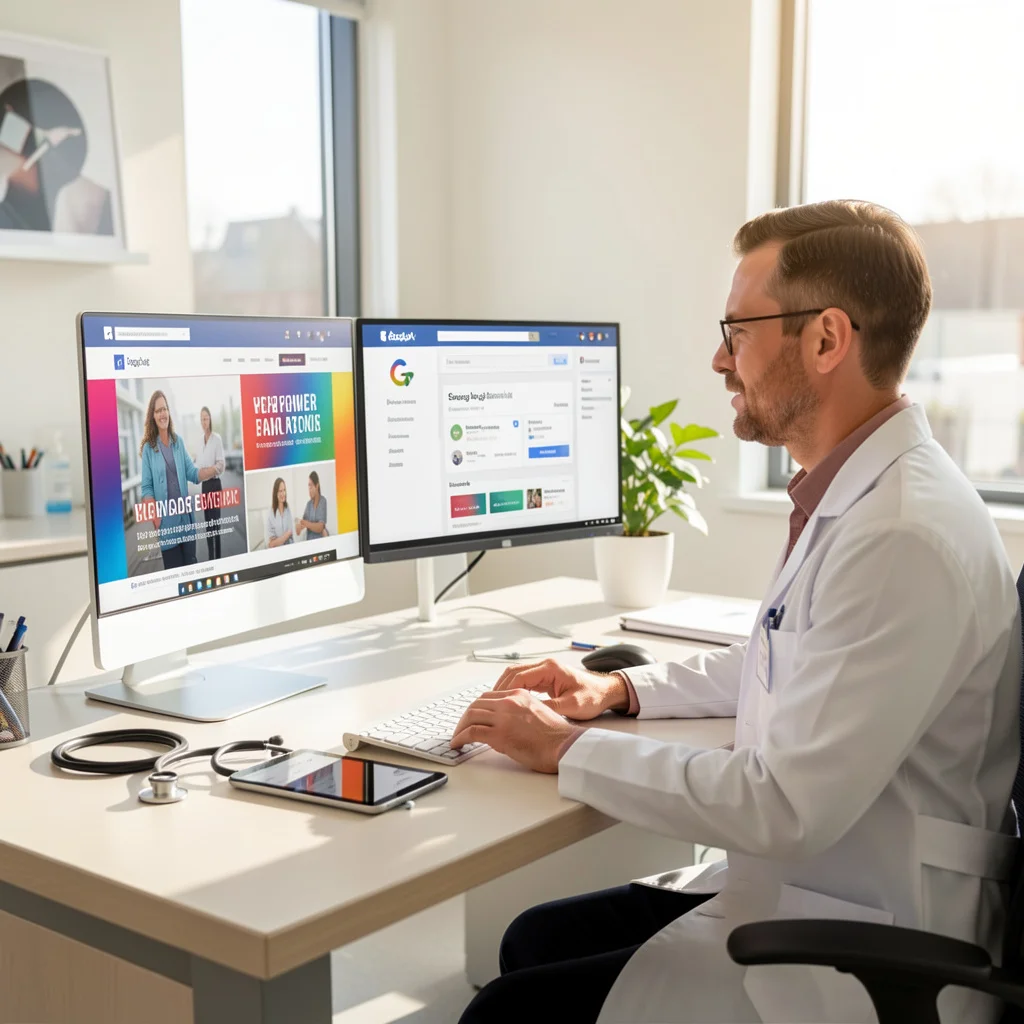
Combining Social Media & Google Ads to Maximize Patient Bookings
The healthcare industry is highly competitive, especially in metropolitan areas where patients expect instant access to care and transparent provider information. Relying on a single advertising channel is no longer enough to sustain growth. To consistently fill your schedule, medical practices must combine social media advertising with Google Ads to capture patients at every stage of their healthcare journey.
This guide explains how a well-integrated strategy helps clinics generate more leads, improve conversion rates, and maximize return on ad spend (ROI).
Why Medical Practices Need a Multi-Channel Ad Strategy
Potential patients rarely book an appointment the first time they see your name. They might discover your clinic through a wellness tip on Facebook, research your reviews on Google, and finally book days later. Combining social media and Google Ads allows you to:
- Reach patients at different levels of "medical intent."
- Build clinical trust and brand authority across the web.
- Stay visible on multiple platforms (Omnipresence).
- Reduce dependency on a single traffic source.
The Role of Social Media Ads: Building Awareness
Social media platforms like Facebook and Instagram are ideal for top-of-funnel marketing. They introduce your clinic to users who may not be actively searching for a doctor today but will need one in the future.
Key Benefits for Healthcare:
- Target by location, age, and family demographics (e.g., parents of young children).
- Promote preventative care, wellness events, and community health tips.
- Showcase your facility, bedside manner, and Reputation Management through video testimonials.
- Generate demand for elective procedures like aesthetics, LASIK, or orthodontics.
The Role of Google Ads: Capturing High-Intent Patients
Google Ads focuses on bottom-of-funnel traffic. These users are actively searching for solutions to specific symptoms or looking for a specialist right now.
Why Google Ads Are Critical for Clinics:
- Appear for high-intent keywords like "emergency dentist near me" or "cardiologist in Houston."
- Capture urgent and last-minute booking needs through Medical PPC.
- Drive traffic directly to secure booking or contact pages.
- Deliver measurable ROI by tracking exactly which keywords lead to phone calls.
How to Combine Social Media & Google Ads Effectively
1. Align Messaging and Branding
Use consistent clinical messaging across both platforms. If your social ads promote "New Patient Specials for Dental Cleaning," your Google Ads should reinforce the same offer. This builds trust and reduces patient confusion.
2. Awareness on Social, Conversion on Google
Think of social media as the "Billboard" and Google as the "Yellow Pages." Use social media to educate patients about a condition (e.g., chronic back pain) and Google Ads to capture them when they search for the solution (e.g., PT & Chiropractic Marketing services).
3. Cross-Platform Retargeting
Not all Google visitors book immediately. You can retarget website visitors who came from Google with social media ads featuring patient success stories or "Meet the Doctor" videos. This keeps your clinic top-of-mind during their decision-making process. Automating these touchpoints with Marketing Automation makes the process scalable.
Budget Allocation Strategy for Clinics
A balanced approach ensures you are both filling immediate gaps and building a future pipeline.
- 50–60% on Google Ads: To capture immediate, high-intent patient searches.
- 30–40% on Social Media Ads: To build awareness and educate your local community.
- 10% on Retargeting: To bring back users who visited your site but didn't book.
Adjust spending based on regional demand — for example, dedicated campaigns for Healthcare Google Ads Management in Texas or Healthcare Google Ads Management in California.
Tracking and Optimizing Performance
Without accurate tracking, even the best strategy fails. Healthcare practices should focus on:
- HIPAA-Compliant Conversion Tracking: Measuring form submissions and phone calls.
- Cost Per Acquisition (CPA): Knowing exactly what it costs to get a new patient.
- Audience Quality: Ensuring social media traffic is staying on your page and reading your content.
Our Healthcare SEO Services complement paid campaigns by providing organic visibility that lowers overall CPA over time.
Common Mistakes to Avoid
- Sending Ads to a Generic Homepage: Always use a dedicated landing page built to Medical Website Design standards.
- Ignoring Mobile Users: Ensure your booking process is seamless on smartphones.
- Inconsistent Offers: Don't promise one price on Instagram and another on your website.
- Failing to Track Phone Calls: You must know which ad prompted a patient to pick up the phone.
Final Thoughts
Combining social media advertising with Google Ads gives medical practices a powerful competitive advantage. Social media builds the initial trust and awareness, while Google Ads captures the patient at the moment of need. When both channels work together, clinics can generate more bookings, lower acquisition costs, and scale faster in competitive healthcare markets.
Frequently Asked Questions (FAQs)
1. Is it better to start with Google Ads or Social Media?
If you need appointments today, start with Google Ads. If you are a new clinic looking to build your reputation in a neighborhood, start with Social Media. For best results, run both simultaneously.
2. How much should a small clinic spend on ads per month?
Most small to mid-sized practices see results with a combined budget of $1,500 to $3,000 per month, depending on the competitiveness of their local market and specialty.
3. Does social media help our Medical SEO?
Indirectly, yes. Increased brand awareness on social media leads to more people searching for your clinic by name on Google, which is a powerful "brand signal" that can improve your organic Healthcare SEO rankings.
4. Can we mention specific medical conditions in our ads?
You must be careful. Google and Meta (Facebook) have strict "Personal Health" policies. You can discuss treatments and symptoms generally, but you cannot imply that you know the user has a specific condition based on their browsing data.
5. Why are our Google Ads clicks so expensive?
Medical keywords are highly competitive. If your clicks are expensive, focus on improving your "Quality Score" by ensuring your landing page is fast, mobile-friendly, and highly relevant to the ad.
About the Author
Our team of healthcare marketing specialists combines deep industry expertise with data-driven strategies to help medical practices grow.